
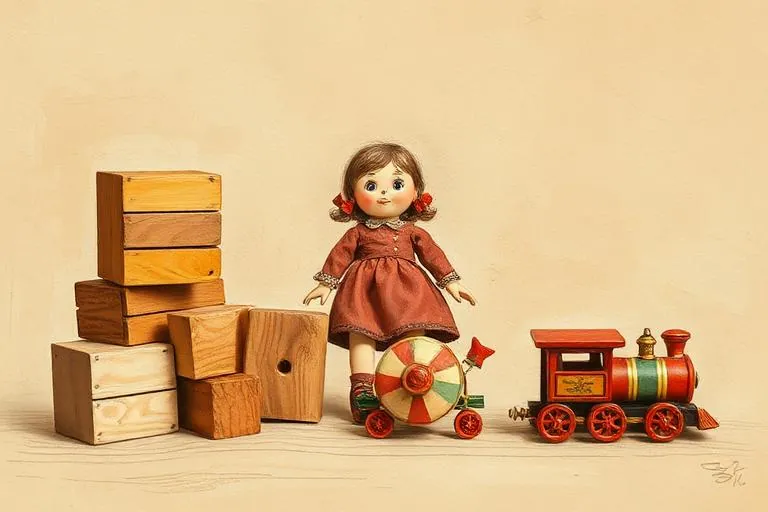
Toys · 1946
Post-War Playtime Sparks a Manufacturing Boom
With World War II concluded and metal rationing ended, toy manufacturers rushed to rebuild playrooms with innovative plastic materials and classic steel designs. American families embraced a renewed sense of optimism through inventive board games, novel physics toys, and returning train sets.
- James Industries | USA | Novelty Toy
Slinky
Invented by naval engineer Richard James, this coiled helical spring became an instant nationwide craze as children watched it walk down stairs in post-war homes.
- A. C. Gilbert Co. | USA | Model Trains
American Flyer S-Gauge Trains
A. C. Gilbert debuted 3/16-scale two-rail S-gauge electric train sets featuring realistic smoke and chuffing sounds as factories pivoted away from war production.
- Lionel Corp. | USA | Model Trains
Lionel Post-War Electric Trains
Lionel resumed full consumer manufacturing of their famous die-cast O-gauge locomotives, filling holiday wish lists with detailed steel steam engine sets.
- Kiddicraft | UK | Construction Toy
Kiddicraft Self-Locking Bricks
Designed by British inventor Hilary Page, these interlocking plastic blocks established the revolutionary design blueprint that directly inspired the modern LEGO brick.
- Alabe Crafts | USA | Novelty Toy
Syco-Seer Fortune Teller
Developed by Abe Bookman and Albert Carter in 1946, this liquid-filled cylinder held die-inscribed answers and served as the direct precursor to the Magic 8 Ball.
- Radio Steel & Mfg. | USA | Ride-On Toy
Radio Flyer Coaster Wagon
With wartime steel shortages officially over, Radio Steel resumed full-capacity manufacturing of its iconic bright-red stamped metal wagons for neighborhood play.
- Fisher-Price | USA | Wooden Pull Toy
Fisher-Price Looky Chug-Chug
Fisher-Price released this charming wooden floor train in 1946, featuring rolling eyes, ringing chimes, and colorful lithographed paper graphics.
- Milton Bradley | USA | Board Game
Chutes and Ladders
Milton Bradley's post-war adaptation of the traditional Snakes and Ladders game remained a ubiquitous family favorite for teaching numbers and rewards.
Enjoyed your trip back in time?