
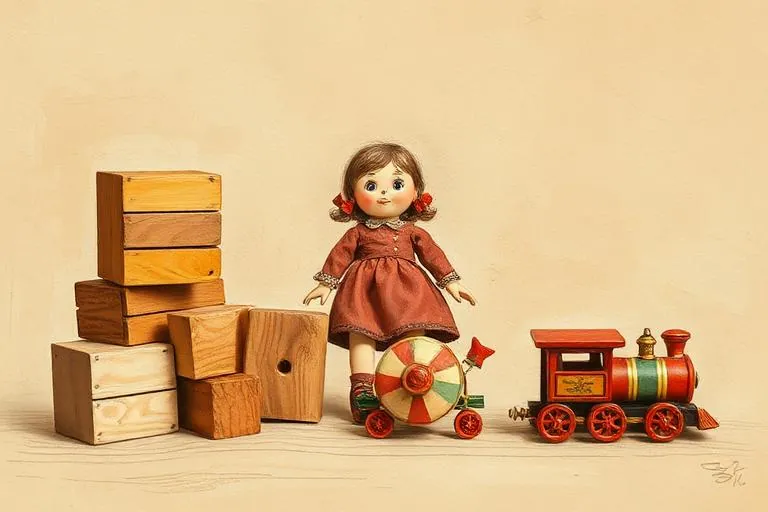
Toys · 1947
Post-War Plastics and Metal Marvels Arrive
In 1947, manufacturers transitioned away from wartime material restrictions to spark a vibrant new era of childhood play. From heavy-duty steel trucks to novel plastic building bricks, post-war innovation transformed playrooms around the globe.
- Mound Metalcraft | USA
Tonka Metal Toy Trucks
Mound Metalcraft introduced heavy-duty steel toy trucks that revolutionized durable play, taking on the iconic name Tonka from nearby Lake Minnetonka.
- Mattel | USA
Mattel Uke-A-Doodle
This child-sized toy ukulele became Mattel's breakout commercial success in 1947, establishing the young company as a major force in the toy industry.
- Hilary Page / Kiddicraft | UK
Kiddicraft Self-Locking Bricks
British inventor Hilary Page patented plastic interlocking bricks in 1947, creating the direct structural inspiration for LEGO's future automatic binding bricks.
- Topps | USA
Topps Bazooka Bubble Gum
Topps launched its iconic pink penny bubble gum wrapped in small collectible comic strips, capturing the imaginations and allowance money of post-war kids.
- Binney & Smith | USA
Crayola 48-Color Crayon Box
Binney & Smith expanded children's artistic possibilities by releasing a classic 48-count box featuring iconic new shades like flesh and metallic gold.
- James Industries | USA
Original Slinky
Invented by naval engineer Richard James, this coiled helical spring captivated post-war America as it walked down stairs and stretched across playrooms.
- Margarete Steiff GmbH | Germany
Steiff Post-War Plush Bears
Following the end of World War II, Germany's famed Steiff factory reopened its doors in 1947 to resume handcrafted production of signature button-in-ear plush bears.
- Louis Marx & Company | USA
Marx Tin Mechanical Toys
Reigning supreme as the world's largest toy maker in 1947, Louis Marx & Company flooded department store aisles with affordable wind-up tin vehicles and figures.
Enjoyed your trip back in time?