
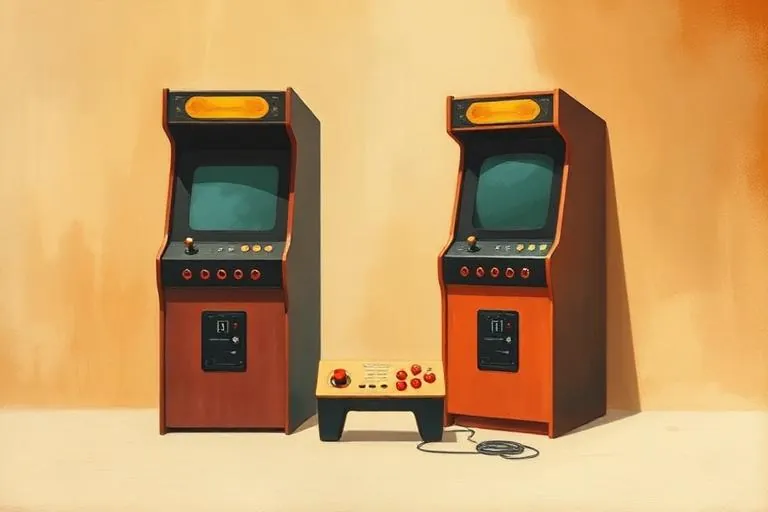
Games · 1955
Mainframe Dawn and Electro-Mechanical Arcades of 1955
In 1955, room-sized mainframe computers in research labs began running the earliest digital wargames and self-learning programs. Meanwhile, bustling commercial arcades relied on sophisticated electro-mechanical target games and pinball cabinets to entertain the public.
- 1955 | Mainframe | Tactical Wargame
Hutspiel
Developed at Johns Hopkins University's Operations Research Office, this early digital simulation evaluated tactical NATO conflict scenarios on mainframe hardware.
- 1955 | IBM 704 | AI & Board Game
Arthur Samuel's Checkers Program
Arthur Samuel updated his IBM program with self-learning routines, creating an AI capable of improving its checkers strategy through played games.
- 1955 | Arcade | Electro-Mechanical
Twin Rifle
Chicago Coin released Twin Rifle, an electro-mechanical arcade hit featuring dual light-rifles and moving target tracks for competitive two-player shooting.
- 1955 | Hardware | Mainframe System
IBM 650 Magnetic Drum Computer
Widely installed across academic institutions in 1955, the IBM 650 became a crucial foundation for students experimenting with early logic programs and games.
- 1955 | Arcade | Electro-Mechanical
Sidewalk Engineer
Williams Manufacturing released Sidewalk Engineer, an interactive arcade cabinet where players manipulated real levers to operate a miniature motorized bulldozer.
- 1955 | Arcade | Pinball Machine
Easy Aces
D. Gottlieb & Co. distributed the Easy Aces pinball cabinet, captivating players in amusement halls with bright mid-century artwork and clever bumper layouts.
- 1955 | Mainframe | Supply Chain Simulation
Monopologs
Created by the RAND Corporation, this interactive logistics simulation allowed military managers to make inventory management decisions on computer hardware.
- 1955 | Arcade | Electro-Mechanical Game
Bally Crosswords
Bally introduced Crosswords to commercial arcades, combining popular word puzzle mechanics with rotating score drums and coin-operated play.
Enjoyed your trip back in time?