Toys · 1932
Depression-Era Ingenuity and the Birth of LEGO
Amid the economic hardship of the Great Depression, toy makers prioritized affordable durability and creative play. From Denmark's wooden craftsmanship to American yo-yo crazes, 1932 sparked resilient innovations that defined childhood play.
- Wooden Toys | Denmark | Ole Kirk
Ole Kirk Christiansen Wooden Toys
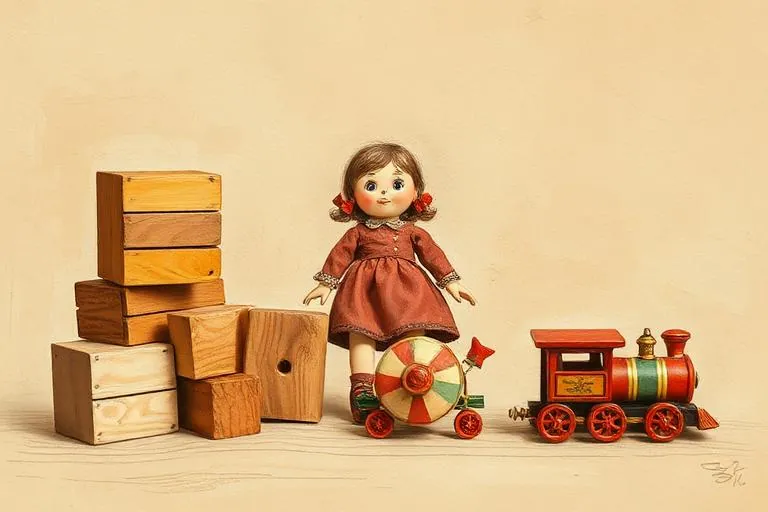
Danish carpenter Ole Kirk Christiansen began crafting high-quality wooden pull toys in Billund, founding the workshop that would soon become LEGO.
- Skill Toy | USA | Duncan Toys
Duncan Yo-Yo
Donald Duncan launched aggressive media campaigns and trick contests across North America, turning the humble yo-yo into a massive national craze.
- Plush Craze | USA | Nelson Knitting
Nelson Red Heel Sock Monkey
The addition of a trademark red heel to Nelson's work socks inspired resourceful parents to stitch together the iconic handcrafted sock monkey.
- Doll | USA | Effanbee
Effanbee Patsyette Doll
Effanbee expanded its immensely successful composition doll line with a budget-friendly 9-inch version tailored for struggling families.
- Pull Toy | USA | Fisher-Price
Fisher-Price Dr. Doodle
This colorful quacking wooden duck pull toy showcased Fisher-Price's early commitment to durable and whimsical playthings for toddlers.
- Board Game | USA | Alfred Mosher Butts
Lexiko (Scrabble Precursor)
Architect Alfred Mosher Butts perfected the letter frequency distribution and tile values for his word game Lexiko, which later became Scrabble.
- Trading Cards | USA | Goudey Gum Co.
Goudey Indian Gum Cards
Goudey released a prominent 192-card bubblegum series featuring vibrant illustrations of Native American figures and historic Western scenes.
- Mechanical Toy | USA | Louis Marx & Co.
Marx Wind-Up Tin Toys
Louis Marx produced low-cost, brightly lithographed tinplate mechanical toys that allowed parents to give affordable gifts during lean times.
Enjoyed your trip back in time?