Tech & Science · 1903
The Dawn of Powered Flight and Modern Physics
In 1903, human ingenuity broke free from earthbound limits as the Wright brothers achieved powered flight, while pioneering physicists unlocked the mysteries of the atom. From the birth of spaceflight theory to breakthroughs in medical diagnostics, science moved rapidly into a bold new century.
- December 17, 1903 | Aviation | USA
Wright Flyer First Flight
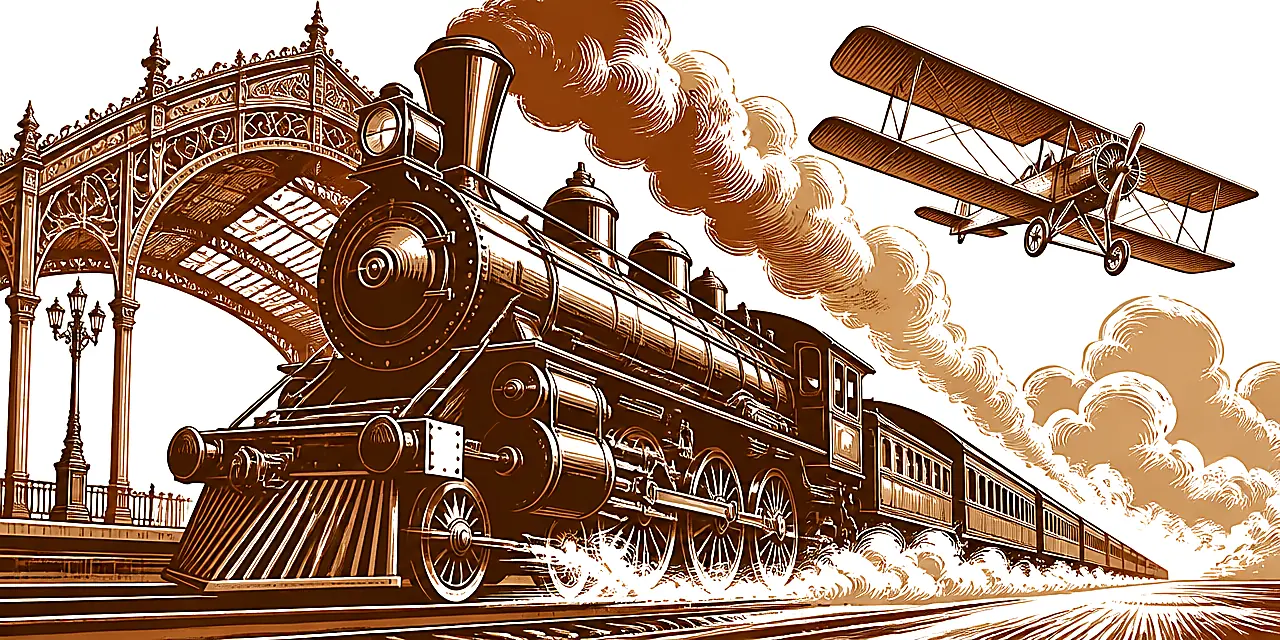
Orville and Wilbur Wright achieved the first controlled, sustained, powered heavier-than-air human flight over the dunes of Kitty Hawk, North Carolina.
- December 1903 | Physics | France
Marie Curie Wins Nobel Prize in Physics
Marie Curie became the first woman to win a Nobel Prize, sharing the award with Pierre Curie and Henri Becquerel for their revolutionary discoveries in radiation.
- 1903 | Spaceflight | Russia
Tsiolkovsky’s Rocket Equation
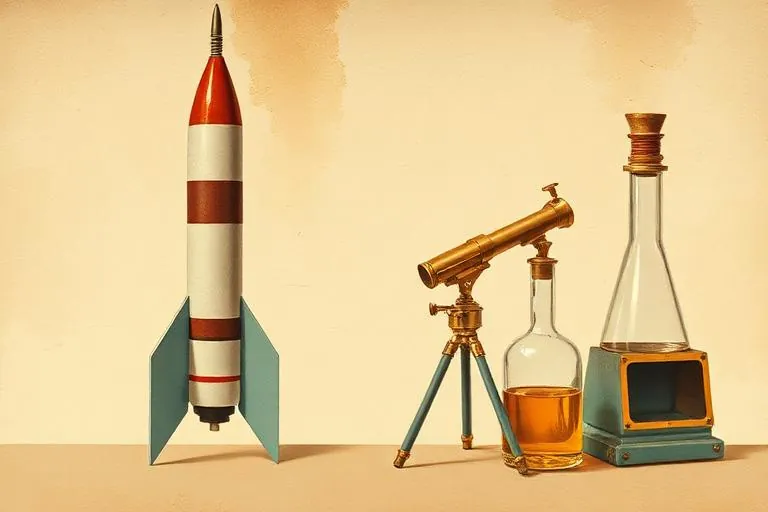
Konstantin Tsiolkovsky published the foundational mathematical equation for rocket propulsion, establishing the theoretical framework for modern space travel.
- 1903 | Medical Tech | Netherlands
Einthoven's String Galvanometer
Willem Einthoven invented the string galvanometer, producing the first practical electrocardiogram (ECG) capable of recording electrical activity in the human heart.
- 1903 | Chemistry | Russia
Invention of Chromatography
Russian botanist Mikhail Tswett invented chromatography, a breakthrough technique for separating plant pigments that revolutionized chemical analysis.
- 1903 | Nuclear Physics | UK
Disintegration Theory of Radioactivity
Ernest Rutherford and Frederick Soddy published their law of radioactive decay, proving that radioactive elements spontaneously transform into entirely new elements.
- 1903 | Mechanical Engineering | Norway
First Operational Gas Turbine
Aegidius Elling built the world's first gas turbine that produced more power than was needed to run its own compressor, paving the way for modern jet engines.
- 1903 | Telecommunications | Denmark
Poulsen Arc Transmitter
Valdemar Poulsen patented the arc transmitter, generating continuous radio waves that enabled the transmission of clear voice audio over long distances.
Enjoyed your trip back in time?