
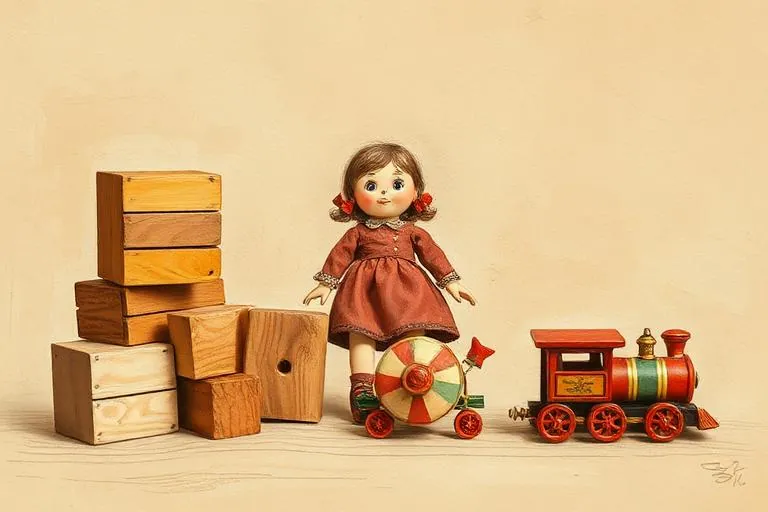
Toys · 1943
Wartime Ingenuity and Paper Dreams
As World War II rationed metal, rubber, and plastic, toy manufacturers turned to wood, paper, and accidental discoveries to keep children entertained. From paper train sets to bouncing synthetic rubber experiments, 1943 showcased remarkable creative resilience in play.
- Milton Bradley | Board Game | USA
Chutes and Ladders
Milton Bradley introduced this classic morality game to American children in 1943, replacing traditional Indian Snakes and Ladders imagery with playground scenes.
- General Electric | Novelty | USA
Bouncing Putty (Silly Putty)
Invented by GE engineer James Wright in 1943 during a search for synthetic rubber substitutes, this weirdly elastic compound quickly amazed onlookers.
- Lionel Corporation | Model | USA
Lionel Paper Train Set
With metal strictly rationed for the war effort, Lionel produced clever heavy-cardboard train kits that kids folded and assembled at home.
- Parker Brothers | Board Game | USA
Wartime Monopoly
Parker Brothers adapted to strategic material shortages by replacing die-cast metal tokens with wooden pawns and using composite board materials.
- U.S. Playing Card Co. | Card Game
Aircraft Spotter Playing Cards
Designed to teach civilians and soldiers to spot Allied and Axis aircraft, these decks doubled as wartime playing cards.
- LEGO | Wooden Toy | Denmark
LEGO Wooden Pull-Along Duck
Before plastic bricks existed, Ole Kirk Christiansen crafted meticulously painted wooden pull-along ducks in his Danish workshop.
- Whitman Publishing | Paper Doll | USA
Military Nurse Paper Dolls
Unrestricted by raw material bans, paper dolls featuring uniform-clad nurses and service women swept across wartime playrooms.
- Richard James | Prototype | USA
The Original Slinky Spring
Naval engineer Richard James accidentally knocked a steel tension spring off a shelf in 1943 and watched in wonder as it walked down a stack of books.
Enjoyed your trip back in time?